Posts

Moments with Mpasu

It was a little after ten when the four of us arrived at the Chichiri Prison to see Sam Mpasu, one of my most revered Malawian writers. When he wrote Nobody’s Friend, Mpasu was arrested by Dr Banda’s agents. His time in prison led to Prisoner 3/75 of Dr Banda, a grueling recount of his time in the inhuman cells of the one party regime. This time,Mpasu is in jail for the Fieldyork scandal when he was Minister of Education.The four of us, fellow journalist Jack McBrams, lawyer Noel Misanjo,performance poet and media researcher Chisomo Mdalla aka Nyamalikiti Nthiwatiwa were ushered to the visitors’ bay, after going through a rigorous search at the gates. All cellphones were also kept away. You could be wondering why we had to visit Mpasu. What other way could we seek the blessing of someone close to us in the writing art? How else could we have the first step of the Writers Block? This is a writers' group that is being formed. The visitors’ bay is a confined area, with some five bench...

David Livingstone: the other side

Image
by Kondwani Kamiyala That Dr David Livingstone was a great man goes without saying. How else can a man have his name in monuments in so many countries in Africa, America and Europe? Livingstone’s life is well-documented, in books, journals and he provides fodder for the historian seeking to piece up history. To the Malawian, Livingstone occupies a great space. Apparently, Malawi history records that the evangelist and medical doctor brought to Malawi commerce, modern medicine, Christianity and civilisation. We forsake the fact that there were iron smelters in the land before Livingstone set in, hence the name Malawi. The name is derived from the flames of fire rising from their furnances. Obviously, the iron smelters were selling their wares, either in exchanging of food or cowrie shells. There was fair trade before Livingstone. History teaches us of the barter trade before the arrival of Livingstone. That the natives healed the sick, however crude the means, before he set foot on the ...

Dan the sax maestro

Image
After watching the Malawi Army brass band during parades in Lilongwe, little boys used to go back home and form their own ‘bands’. It is easy to imagine the little boys, with drums made from tins, ‘police caps’ from cartons and empty Chibuku packets making up for boots, walking about the streets of their township and doing renditions of such popular songs as Ku Chichiri Sindidzapita . No one could imagine that one of those little boys, playing songs just for the fun of it, was making the first steps in a long journey to music. No one could ever imagine that the little boy who was so much given to playing a ‘trumpet’ made from a pawpaw stalk would grow into one of the greatest saxophone players to come out of the Malawi soil. Dan Sibale looks back at those early years with a tinge of nostalgia on his forehead: "We used to have fun watching the Army band and we formed our own band and mimicked the music they played. I played no other instruments than the trumpet made from a pawpaw s...

Letter to The Patriarch

Dear The Patriarch, It is not in my habit to pen patriarchs. But this once, I thought I should write one missive for you, The Patriarch. I have been compelled to, looking at recent events in Africa and I hope you will not misconstrue my writing for insolence. I know you have ever been an autocratic authority in your life. You have ever tasted how sweet a thing power is. You know how good it feels to put your best foot forward and hundreds others want to wipe the specks of dust that you gathered with that single step. You know how good it feels to preside over a country. You have been there, at the palace and you sure know all the trappings that come with it. If you were not the one in power, you were somewhere close to the top echelons of power, you were the power itself, even when there was somebody else in the main bedroom of the palace. I know you, The Patriarch, already know the story of Kenya. It is not about Jomo Kenyatta but Mwai Kibaki that I write. You remember, he had 51.3 pe...

The Trek to Freedom

Image
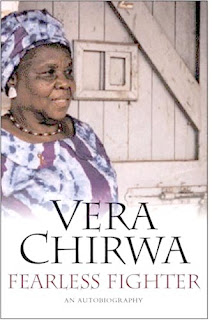
One would think dying is better than spending 12 years of your life in prison for a case you have little knowledge of. And come to think of it, spending those 12 years living each day knowing that the hangman will one day come with his noose, and hang you, like he did with Saddam Hussein, is torture at its worst. Yet, you can only come to terms with the harsh reality that your spouse is dead, in another prison after that span of a life. One would rather live, one more day and tell the people the untold story, the story that gave you the will to die, and the will that made you to live, even after your husband’s death. Well, this is no script. It is a true life story, the story of Vera Chirwa, one of the greatest of Malawian human rights activists. Not only is she able to fight for women’s rights. She has been there, done that and has got the experience which other women rights activists can only dream of: PRISON. And 12 years of prison is tough. It is very rough. Mind you, this is no ot...

Write Talk: A chat with Ken Bugul

Image
Celebrated Senegalese writer Ken Bugul (Marietou Mbaye) talks on a lifetime in writing. On talking to celebrated Senegalese writer Ken Bugul, whose real name is Marietou Mbaye, a few things about Malawian writing come out clear, in comparison to what is going on in other African countries. The writing art cannot move an inch if the government doesn’t put it as part of its development agenda, neither can writing advance if the private sector does not see the gold that is buried in the dust of the writing art and if writers’ groups are dormant organisations, there is no hope for the country. As I talked to her in the gardens of the Chez Maky in Blantyre, I was still reading Vera Chirwa’s Fearless Fighter and my hands were itching for The Jive Talker by Samson Kambalu, two recent Malawian autobiographies that are receiving high acclaim on the international literary parlour. Mbaye’s words ring true in my mind when I think of these two books, published internationally. "Malawi has goo...

Learning it from the stars

Image
They come and go. Their shows are, to say the least, massive in all senses of the word: good sound, nice performance that addresses the real issues. Yet Malawian musicians seem not ready to take their lesson on how well things should be done in music. Only last week there was an astounding performance by the Ivorian Dobet Gnahoré, who performed at the French Cultural Centre. There was so much to learn from her. She captured her audience with a mesmerising voice and daunted them when she played typical traditional African music instruments. That is not talking about the way she combined choreographic and theatrical elements in her dancing antics. But the greatest lesson Malawian musicians must have learned from her, if they missed such a lesson from other African gurus who have performed here like Hugh Masekela and Oliver Mtukudzi, is that they must keep a safe distance from politics. That is to say, they must never take political sides when they tackle politics. May be they can take po...